Invisible detection, no drilling
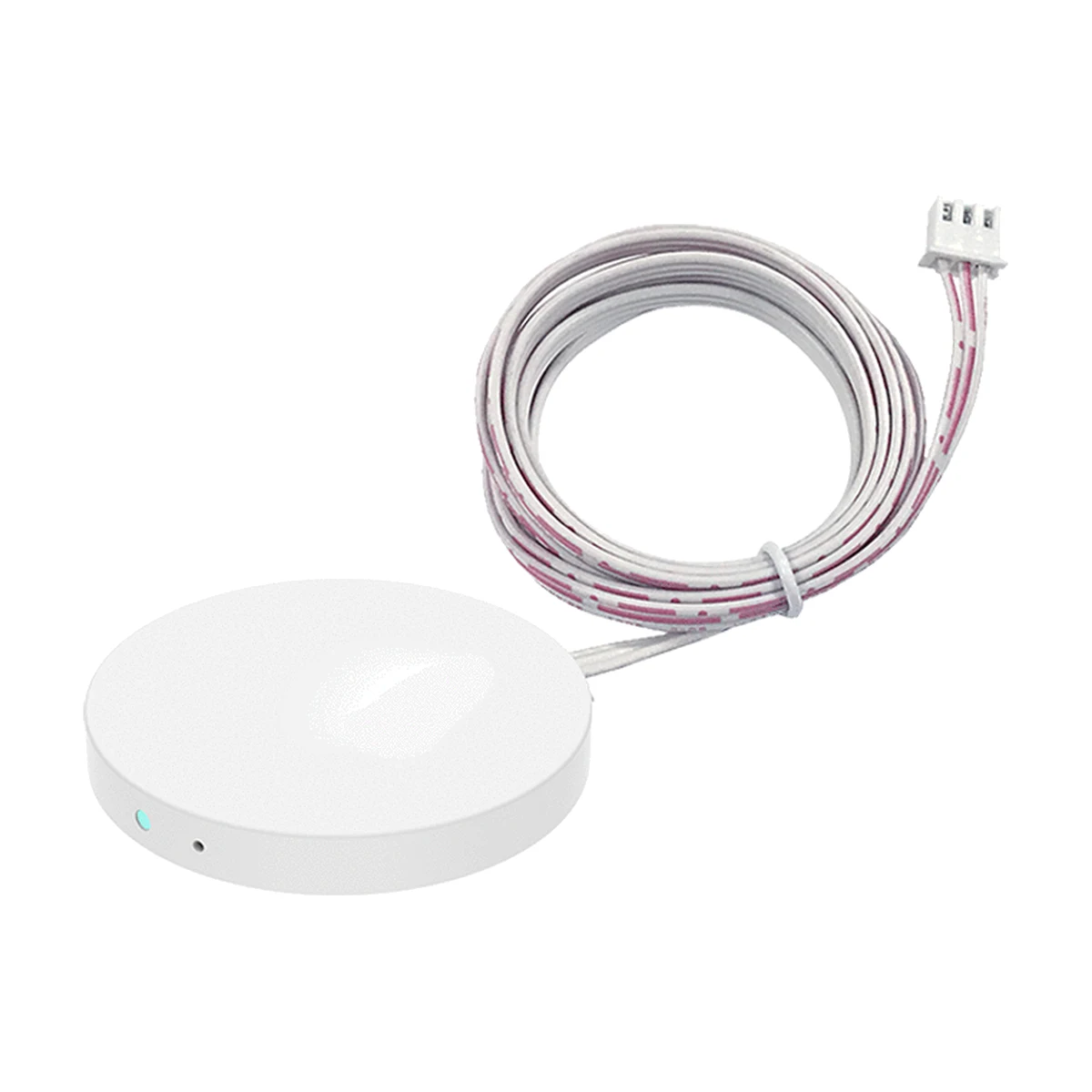
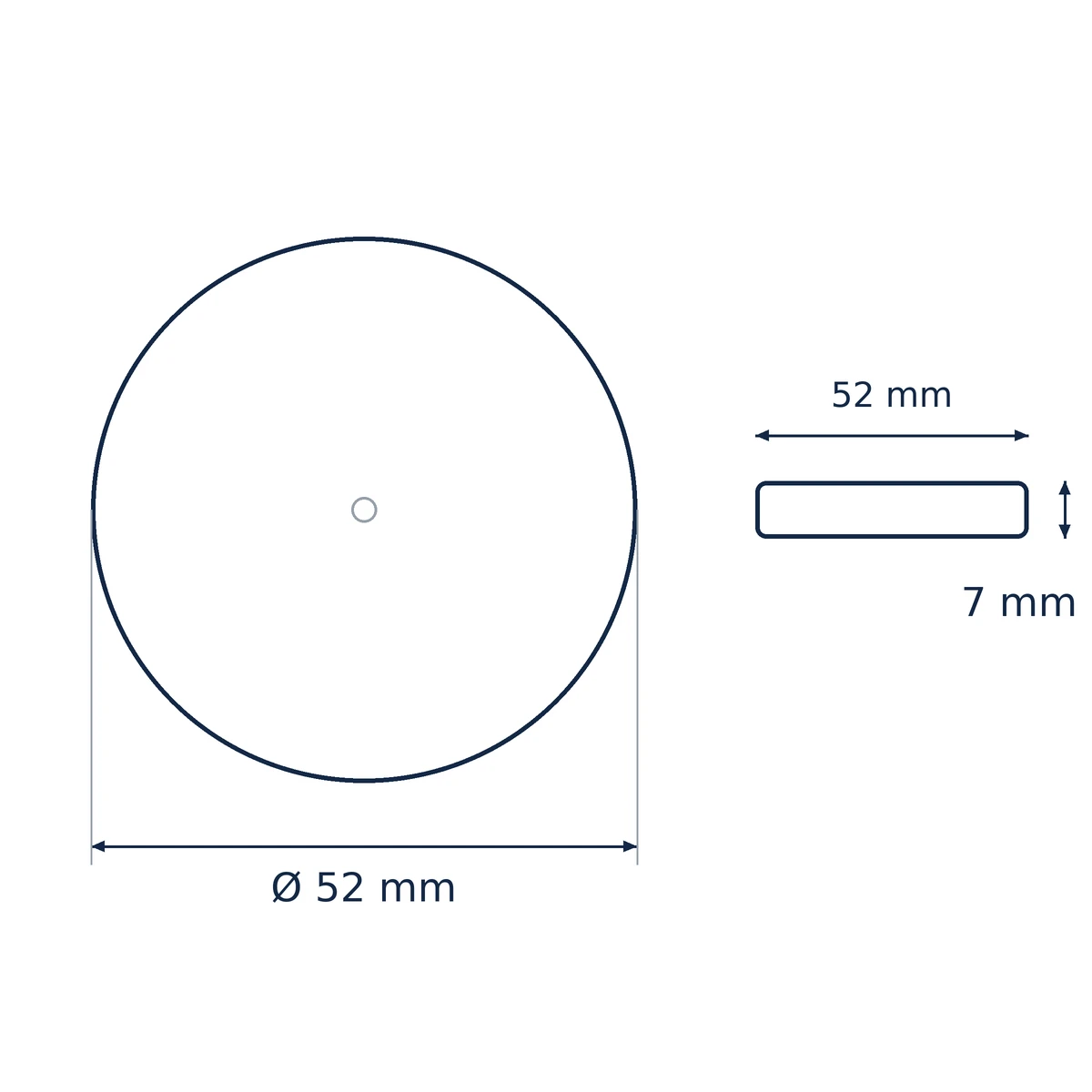
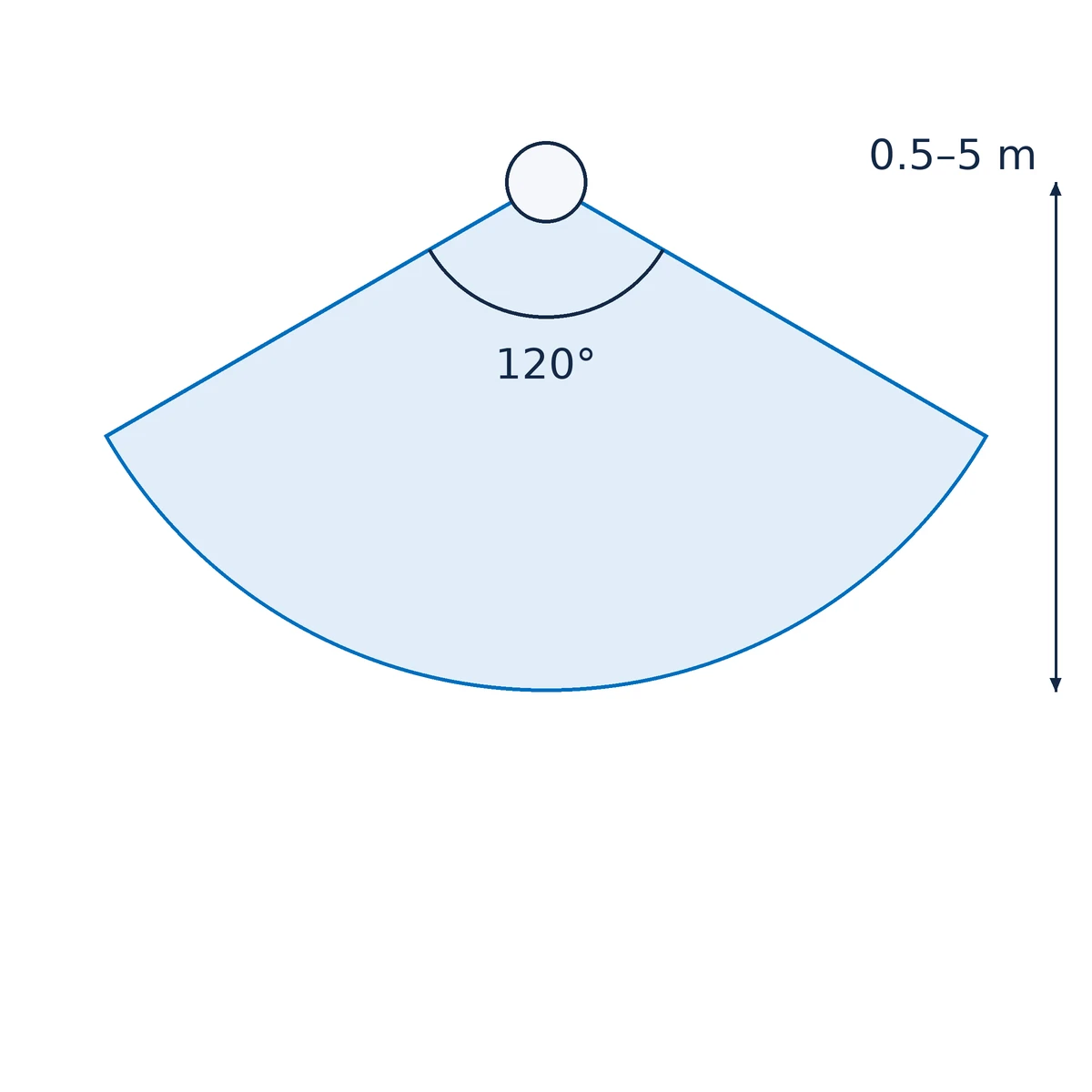
Built-in 5.8 GHz radar detects movement through wood, plastic, glass and acrylic, keeping the sensor out of sight. Switches on with movement and off after the chosen delay. Only 7 mm thick, 0.5–5 m range and 120° angle.
Surface mounting with 3M adhesive
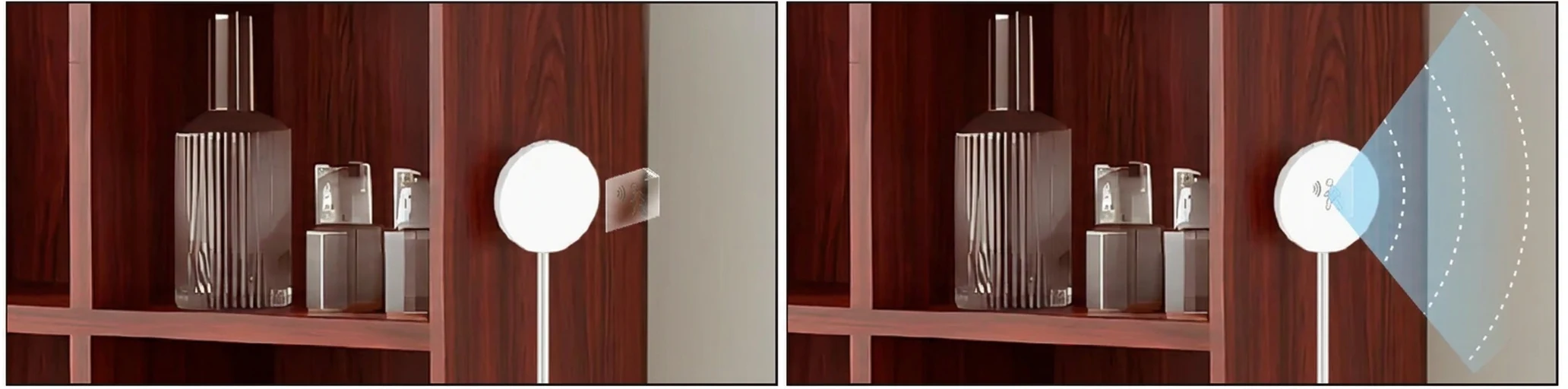
Stick the sensor back to the panel with 3M adhesive and place the indicator sticker on the front. No drilling required.
Concealed installation behind a panel
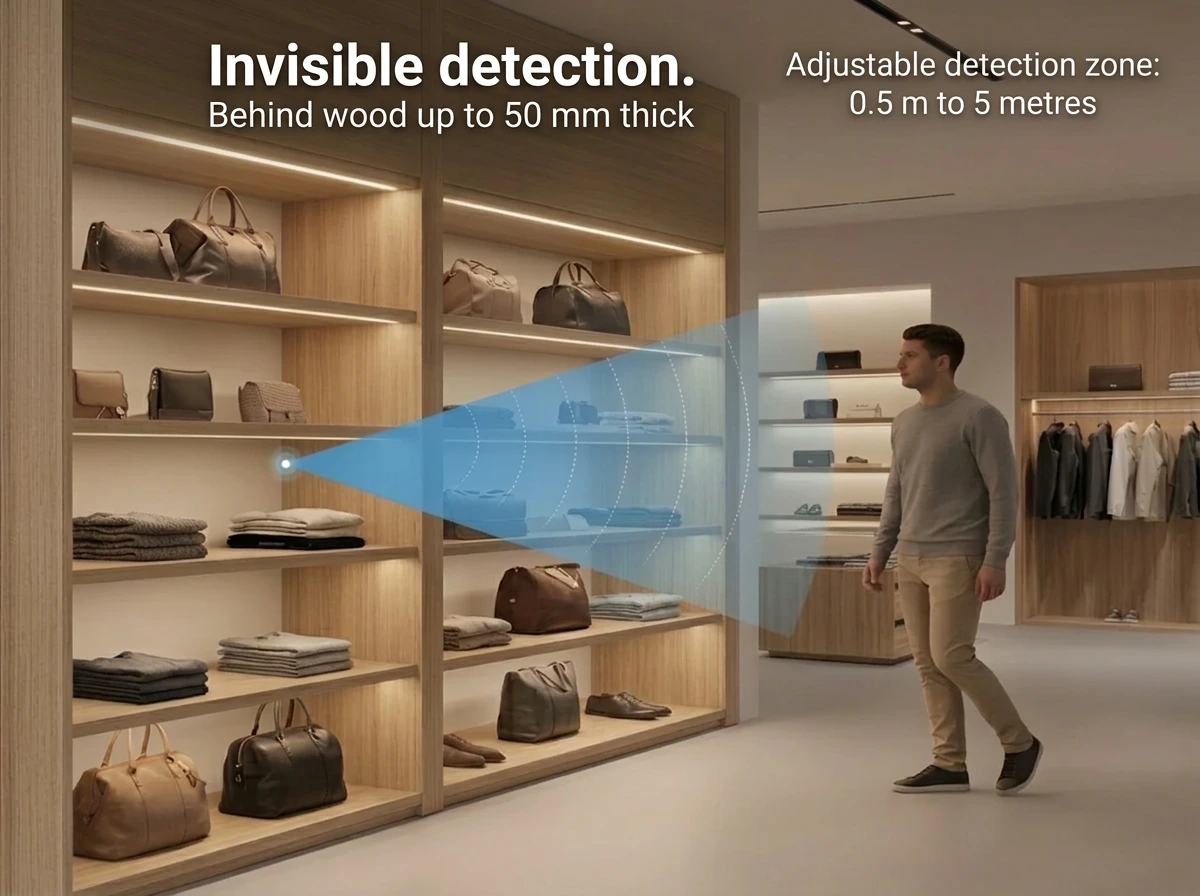
Stick the sensor face to the rear of the panel and place the indicator sticker in the corresponding front position. It detects through wood and non-metallic materials up to approximately 50 mm thick. Test the actual material and thickness. Avoid metal and concrete.
DC and Dupont wiring
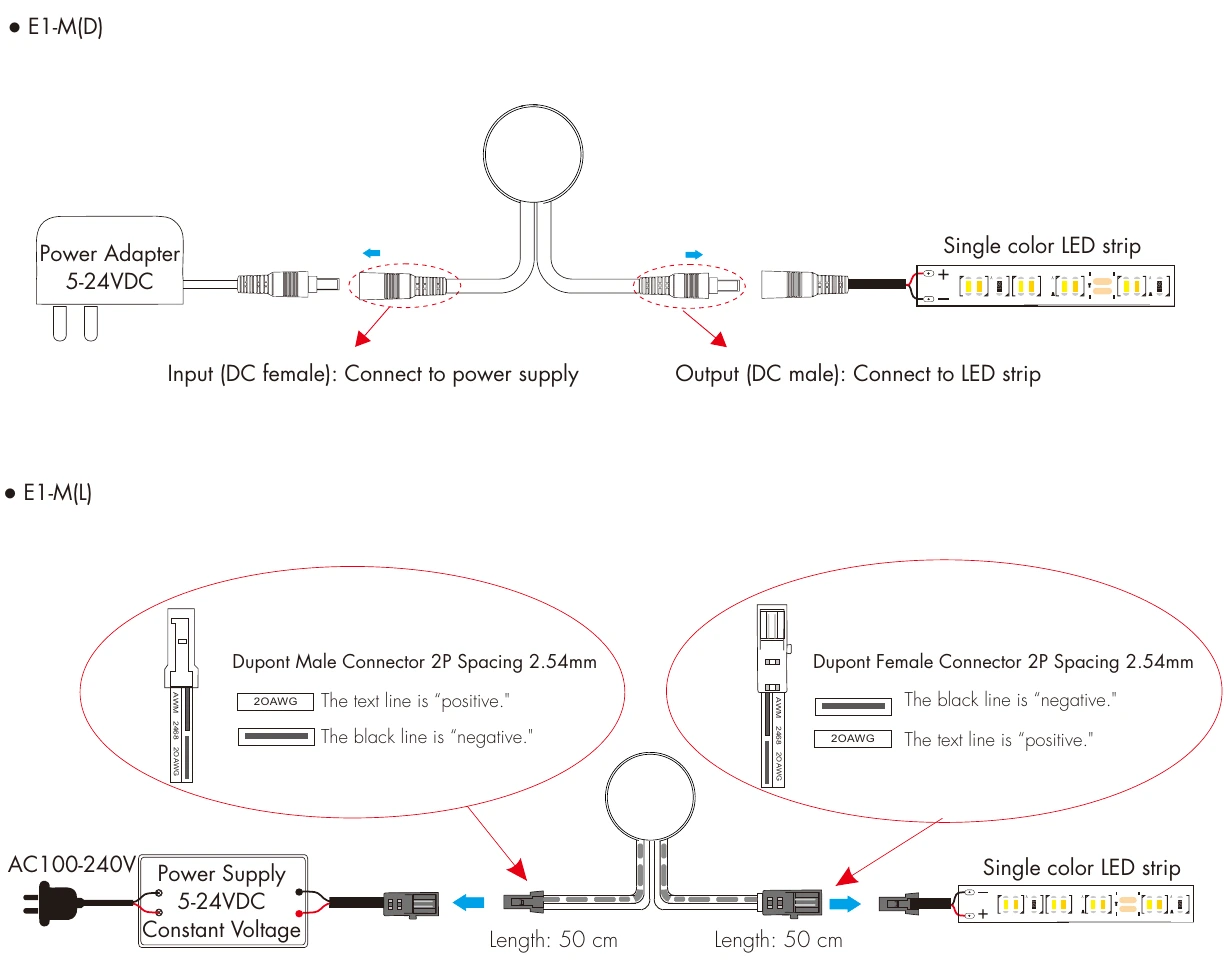
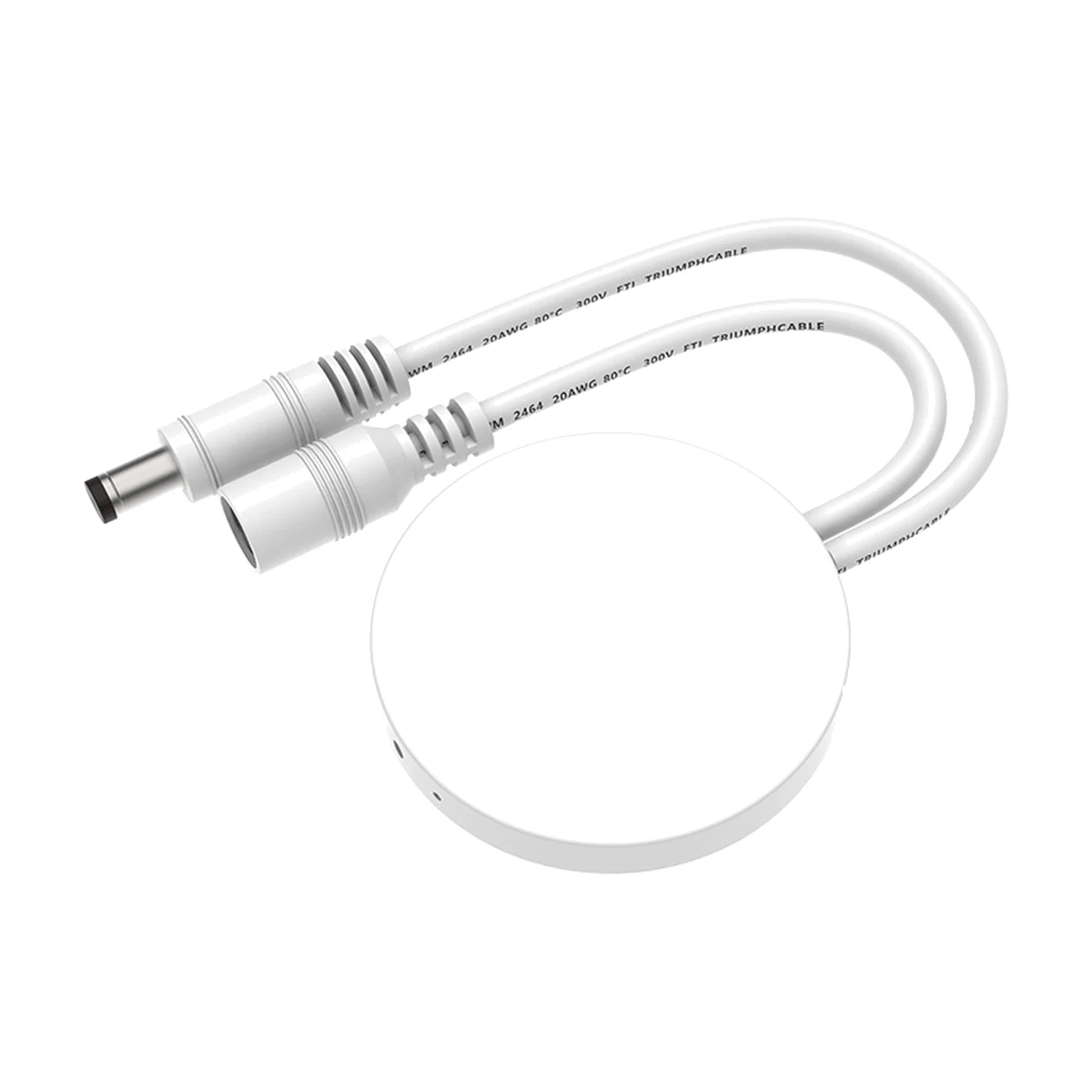
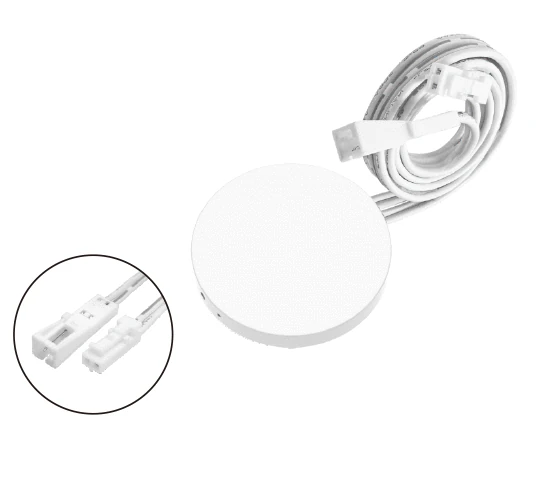
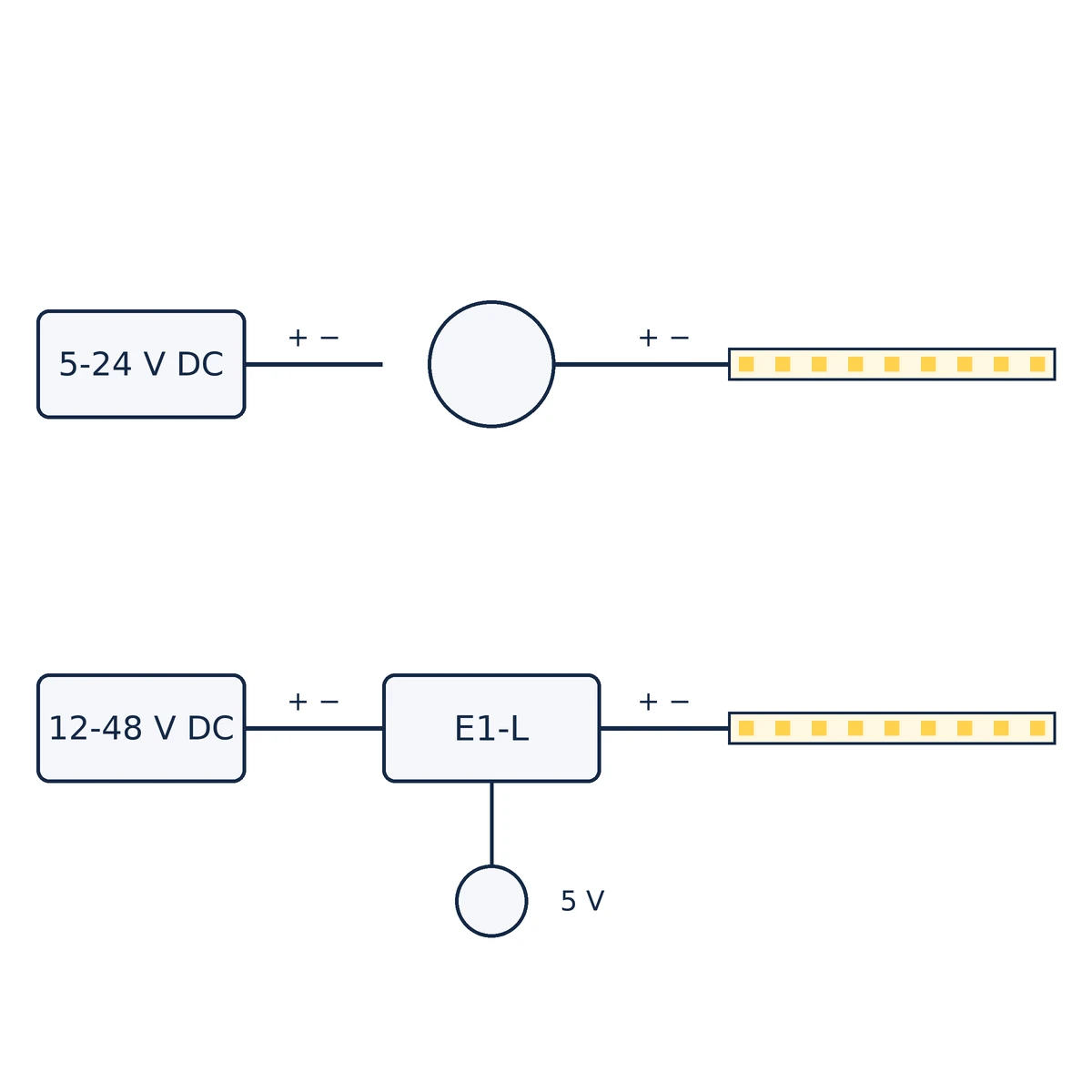
E1-M(D): 5–24 V DC constant-voltage supply → female DC input → sensor → male DC output → single-colour LED strip. E1-M(L): male Dupont input and female Dupont output, 2 pins, 2.54 mm pitch; 20 AWG cable, 50 cm each side. Marked wire positive, black wire negative.
Maximum 3 A: 15 W at 5 V, 36 W at 12 V and 72 W at 24 V. Disconnect power before wiring; never connect directly to 230 V.
Delay and detection settings
- Short press: 10, 30, 60, 180 or 300 s delay (1–5 flashes).
- Factory settings: 30 s and 3 m.
- Long press: 5 s → 5 m; 10 s → 3 m; 20 s → 0.5 m.
- The 15 s setting is listed as 1.5 m in features and 1 m in instructions: awaiting manufacturer confirmation.
- Settings are restored after power failure.
Dimensions and applications
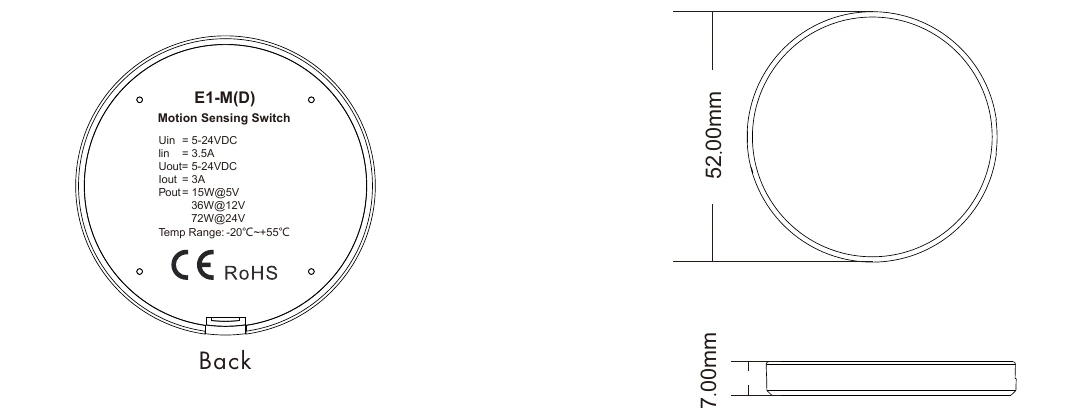
Cabinets, display units, wardrobes, wine cabinets, corridors and stairs. Recommended wall height: 1.2–1.8 m; ceiling approximately 3 m. Keep sensors at least 5 m apart and avoid large metal objects or pipes facing them. Recommended delay: 30–60 s for individual or staircase use; 10 s for sequential lighting.
Individual switch application
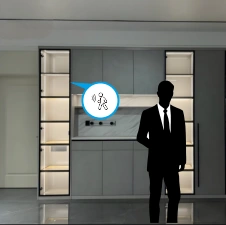
Set the switch-off delay to 30 or 60 seconds. The lighting turns on when movement is detected and switches off after the selected delay without further movement.
Multiple sensor application
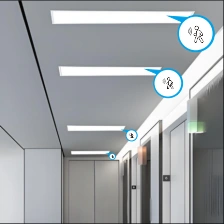
For installations with multiple sensors, set the switch-off delay of each sensor to 10 seconds. Each sensor activates its lighting when movement is detected, allowing the lights to switch on in succession as a person moves along the corridor. Keep sensors at least 5 metres apart to avoid mutual interference.
Staircase lighting application
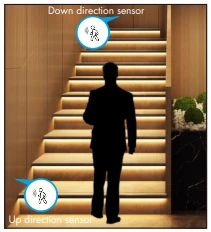
For staircases, install two sensors, one at the top and one at the bottom of the staircase. Set the switch-off delay of both to 30 or 60 seconds: the lighting switches on when going up or down and off automatically once the selected time passes without detecting movement.