24V LED Strips
-
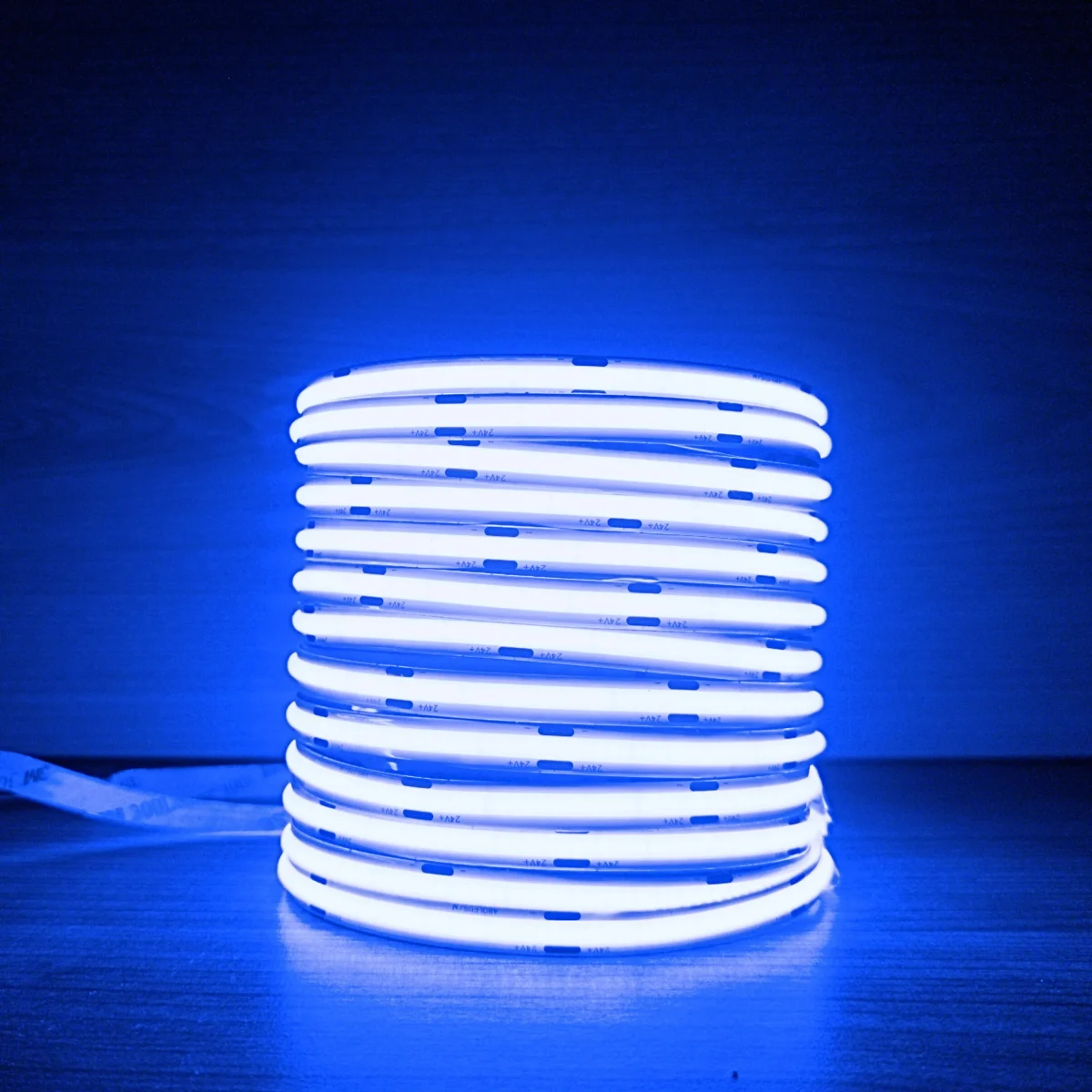
Blue COB LED Strip 24V - 5 meters - 480LEDs/m - CRI>90Ra - 12W/m - IP20 - cut every 5cm
Blue 24V COB LED Strip with 480 LEDs/m. Continuous light effect without visible dots. CRI>90. 12W/m. 5 meters. Blue decoration and ambiance.
11.90 € SKU: TLCOB48012WAZ_T12 In stock -
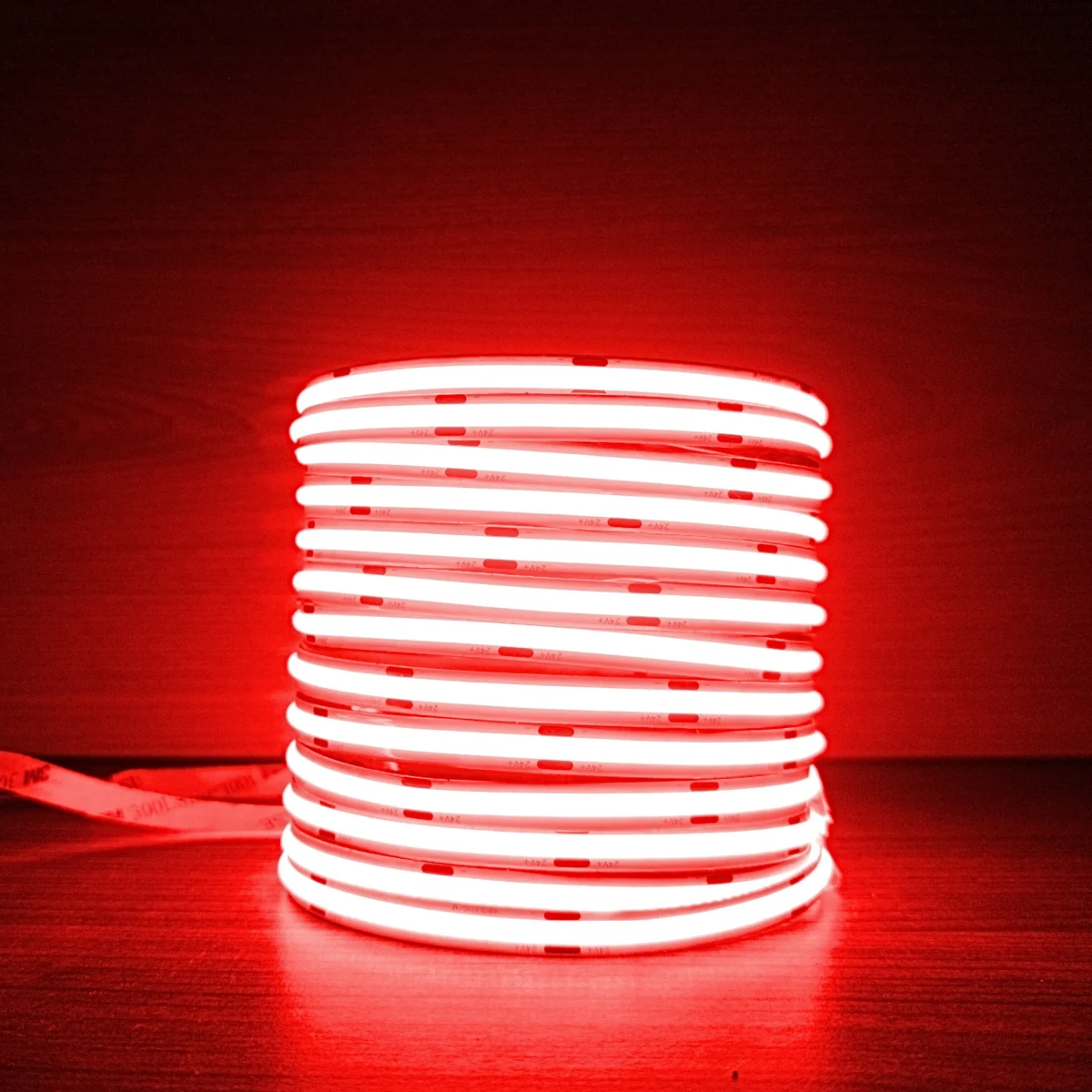
Red COB LED Strip 24V - 5 meters - 480 LED/m - CRI >90 - 12W/m - IP20 - Cut every 5cm
Red COB LED Strip 24V with 480 LEDs/m. Continuous light without dots. CRI>90. 12W/m, cut every 5cm. 5 meters. For red decoration and signage.
11.90 € SKU: TLCOB48012WRO_T10 In stock -
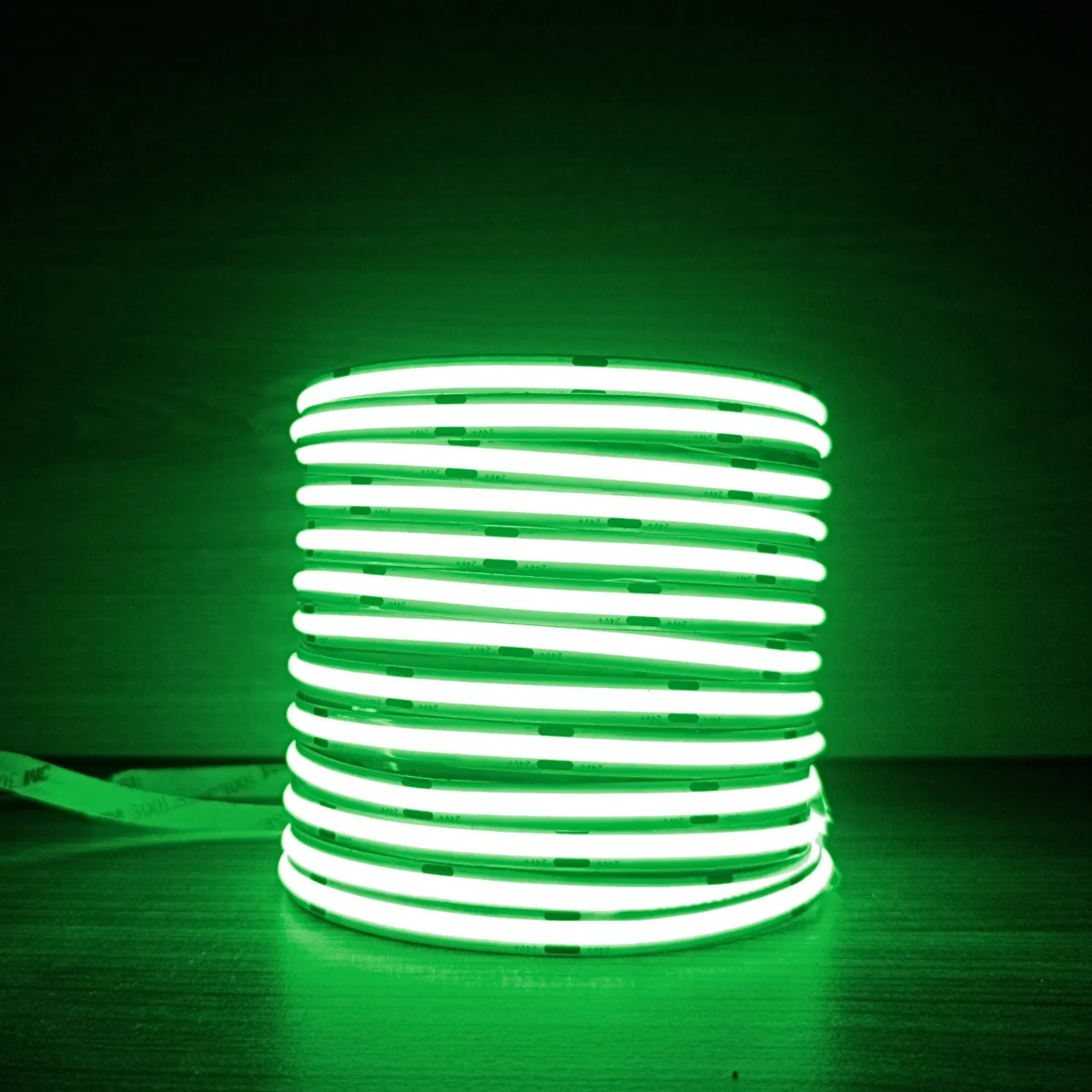
Green COB LED Strip 24V - 5 meters - 480LEDs/m - CRI>90Ra - 12W/m - IP20 - cut every 5cm
Green 24V COB LED strip with 480 LEDs/m. Homogeneous light with no visible LED dots. CRI>90. 12W/m. 5 meters. Ideal for green decoration and signage.
11.90 € SKU: TLCOB48012WVE_T11 In stock -
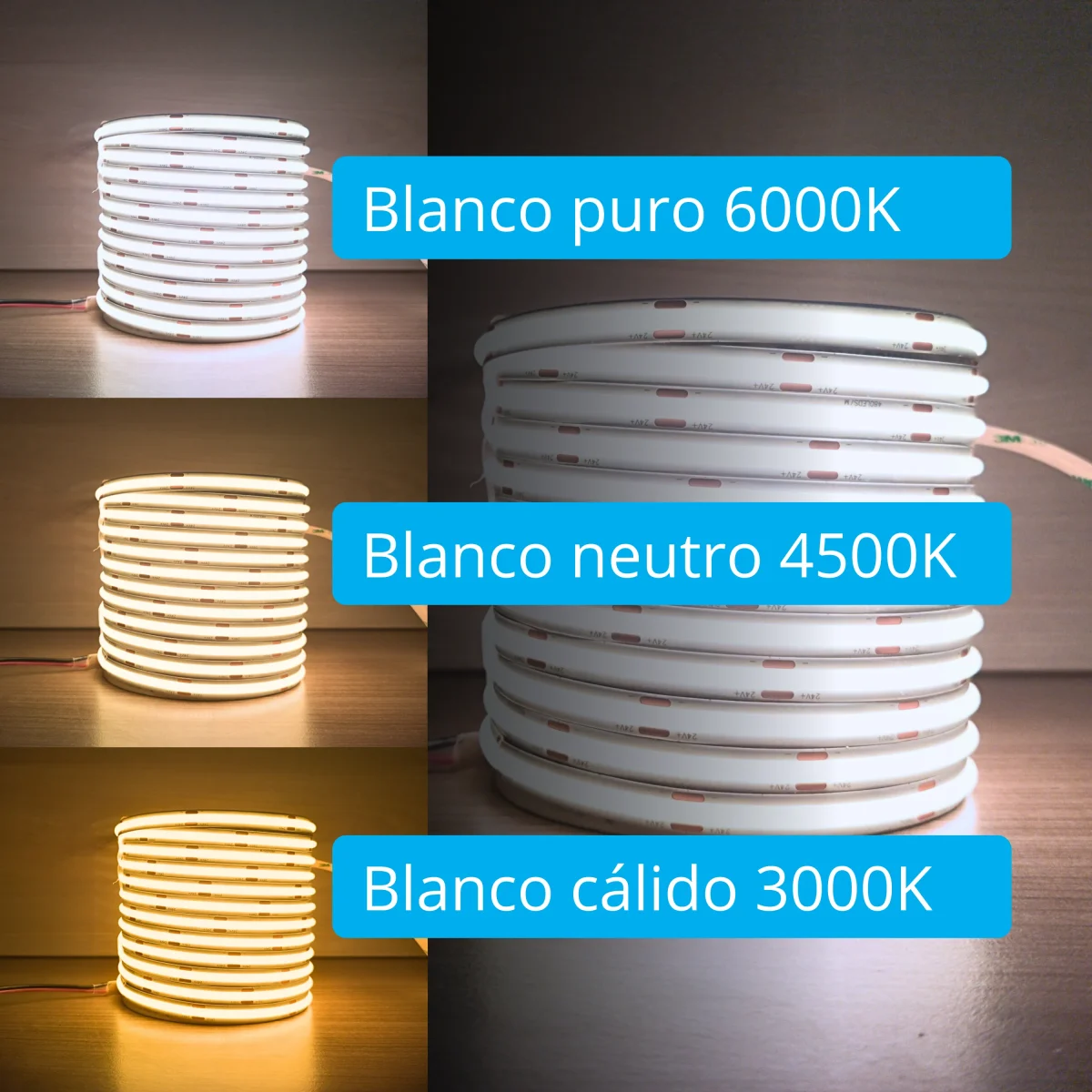
COB LED Strip 24V - 5 meters - 480LEDs/m - CRI>90Ra - 12W/m - IP20 - cut every 5cm
White COB LED Strip 24V with 480 LEDs/m and CRI>90. Uniform light without visible dots. 12W/m. Cut every 5cm. 5 meters. Ideal for professional lighting.
11.90 € SKU: GPT-LS2835x120BP&BC_L9.-1 In stock -
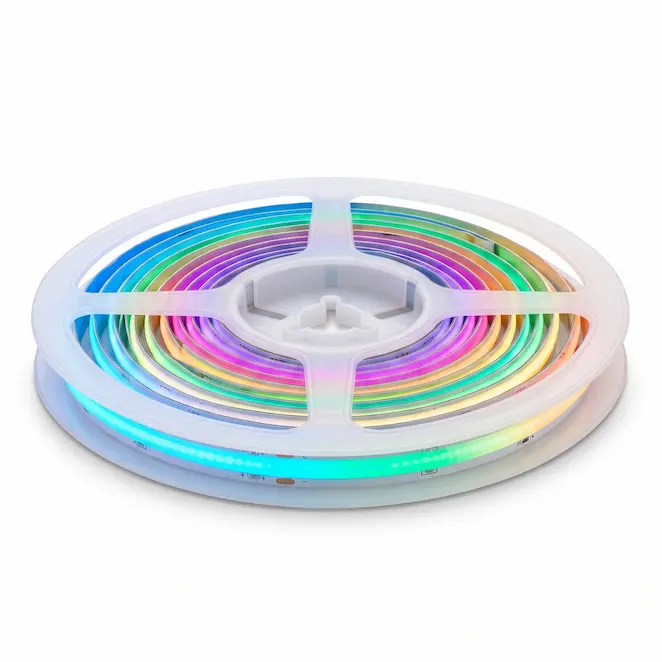
COB RGB Pixel Digital LED Strip 24V - 5m - 420 LEDs/m - 15W/m - IP67 - SPI2811 - cut every 10cm
COB RGB Pixel Digital LED Strip 24V with 420 LEDs/m and pixel-by-pixel control (SPI2811, 10 pixels/m). 15W/m, IP67 waterproof, cut every 100mm. 5-metre roll with male and female connectors on both end…
42.90 € SKU: TLCOB420RGB15W_T13 In stock -
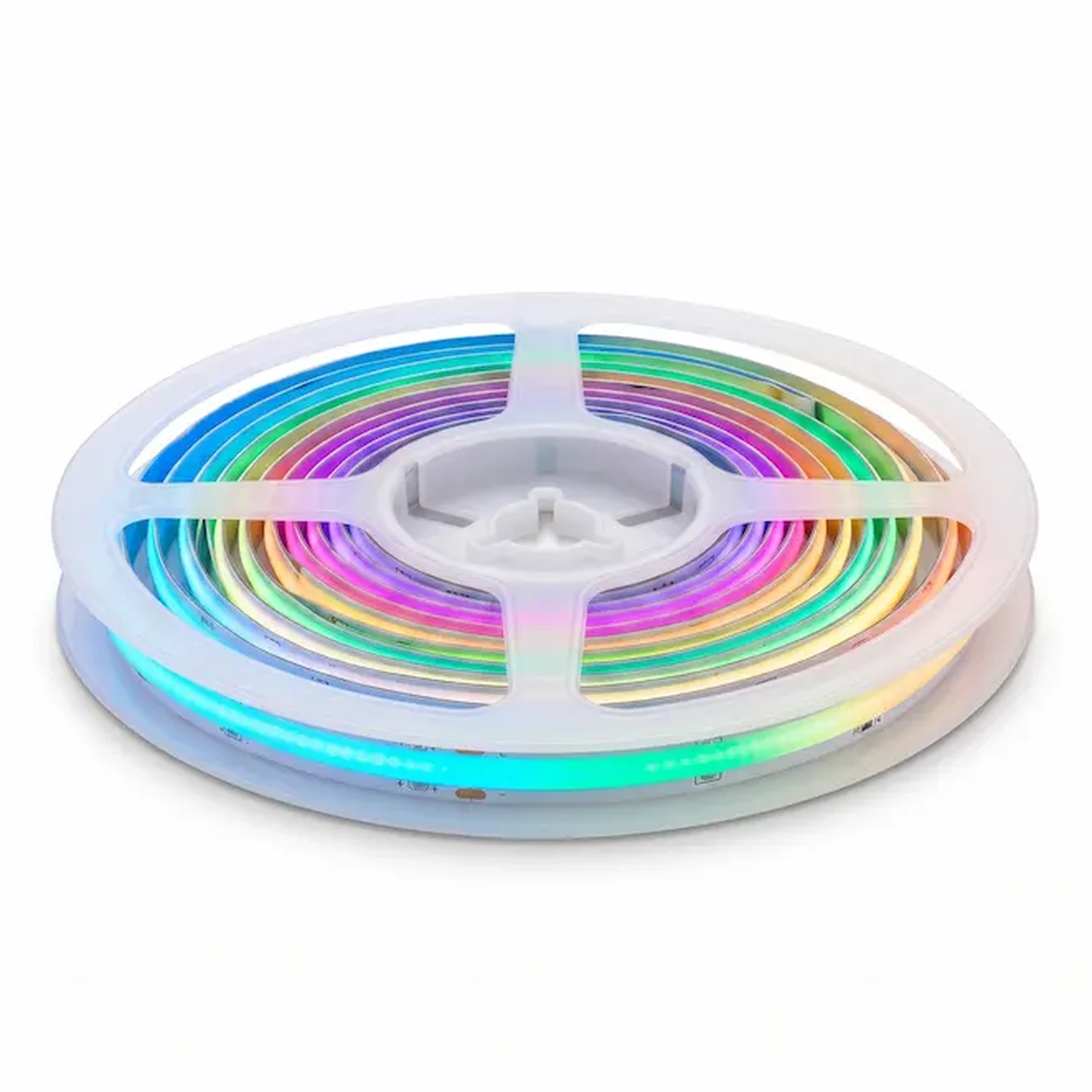
COB RGB Pixel Digital LED Strip 24V - 5m - 720 LEDs/m - 21W/m - IP65 - SPI2811 - cut every 5cm
COB RGB Pixel Digital LED Strip 24V with 720 LEDs/m and pixel-by-pixel control (SPI2811, 20 pixels/m). 21W/m, IP65 waterproof, cut every 50mm. 5-metre roll, 12 mm wide, 150 mm 20AWG cable with male/fe…
53.00 € SKU: TLCOB720RGB21W_T14 In stock -
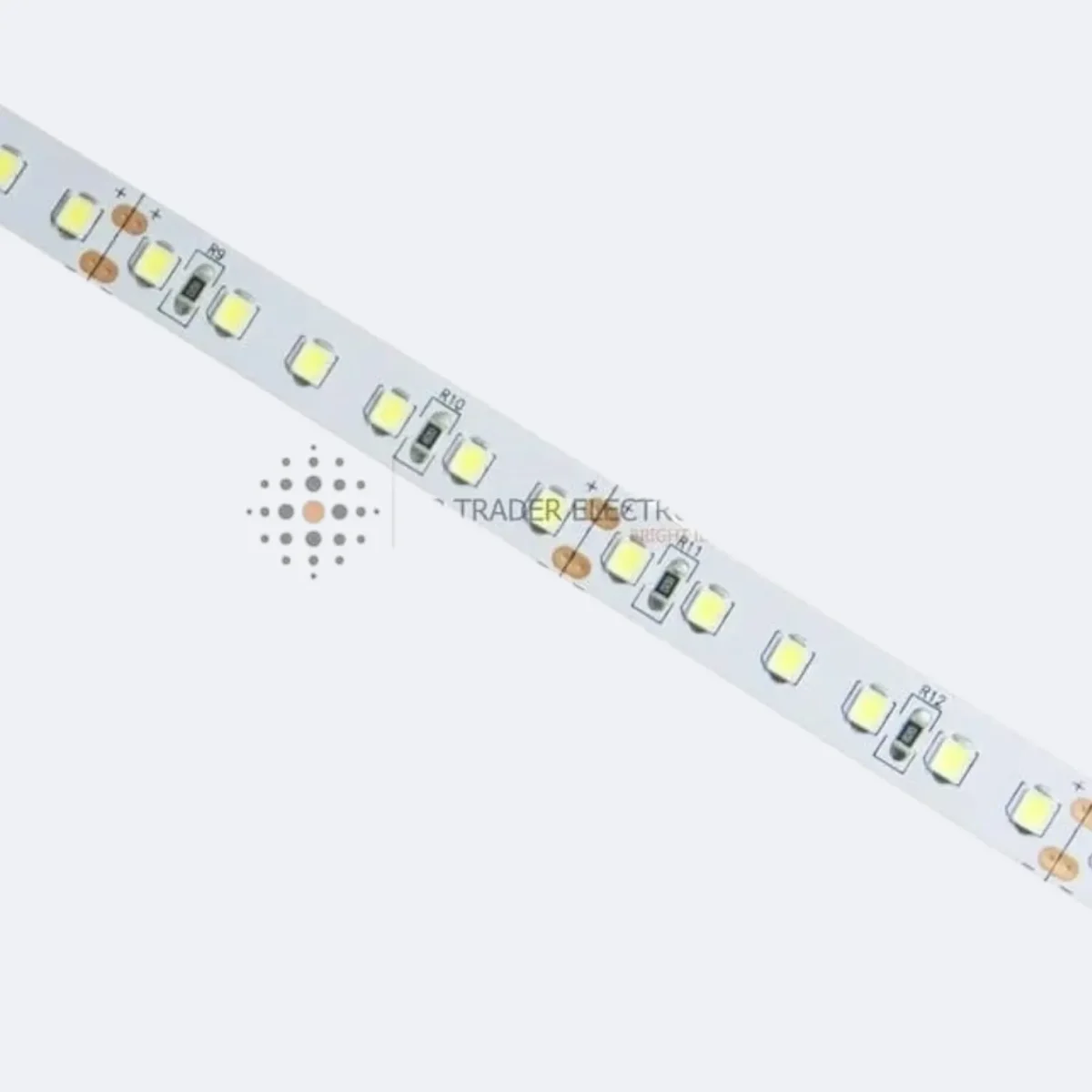
LED Strip 120 LEDs/m IP20 24V 14.4W/m
Measurements LED Strip 2835 120 LEDs IP20
15.98 € SKU: WLED-202 In stock -
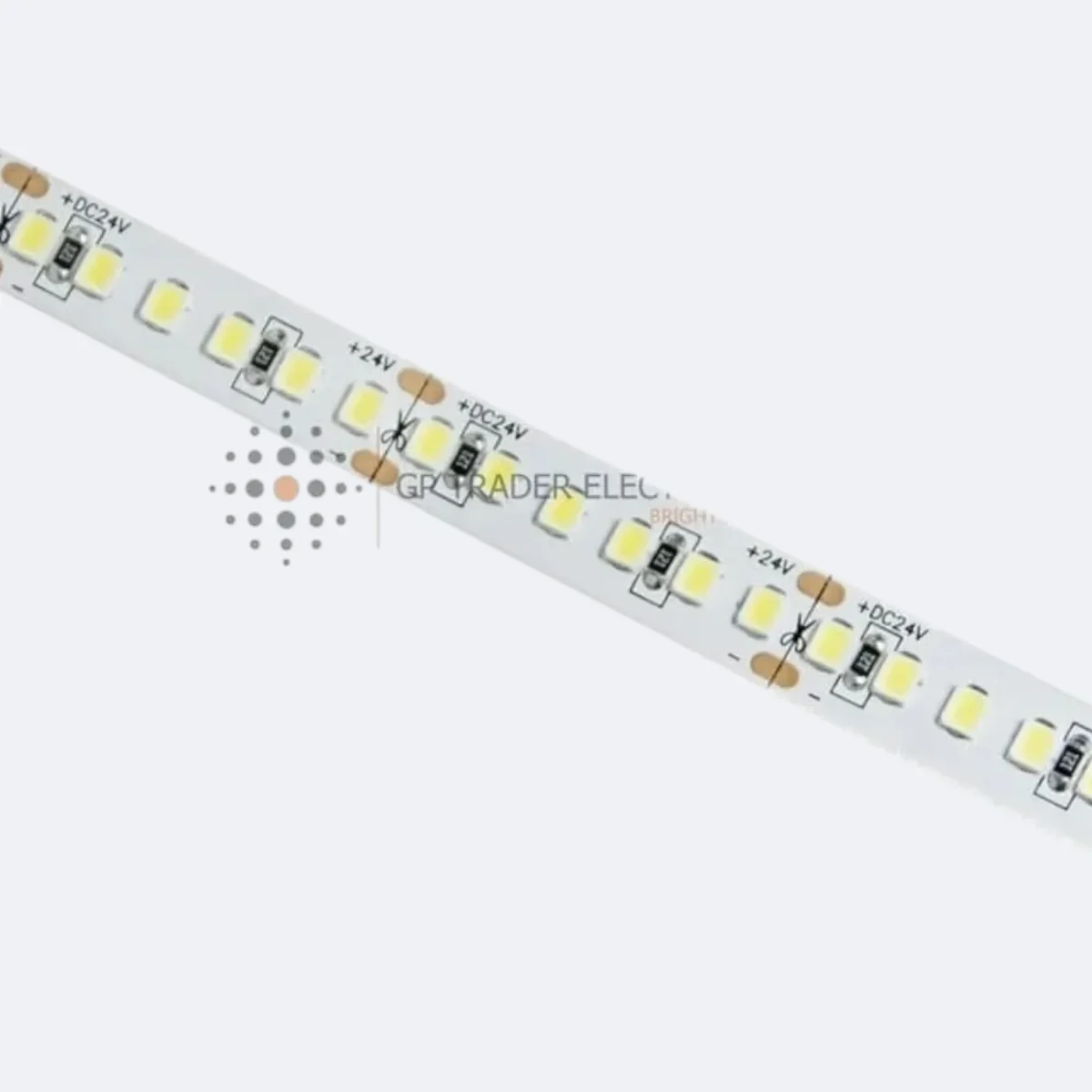
LED Strip 180 LEDs/mt IP20 24V 19W/mt
High brightness LED Strip 180 LEDs IP20 18.5W/meter
18.50 € SKU: WLED-9695 In stock -
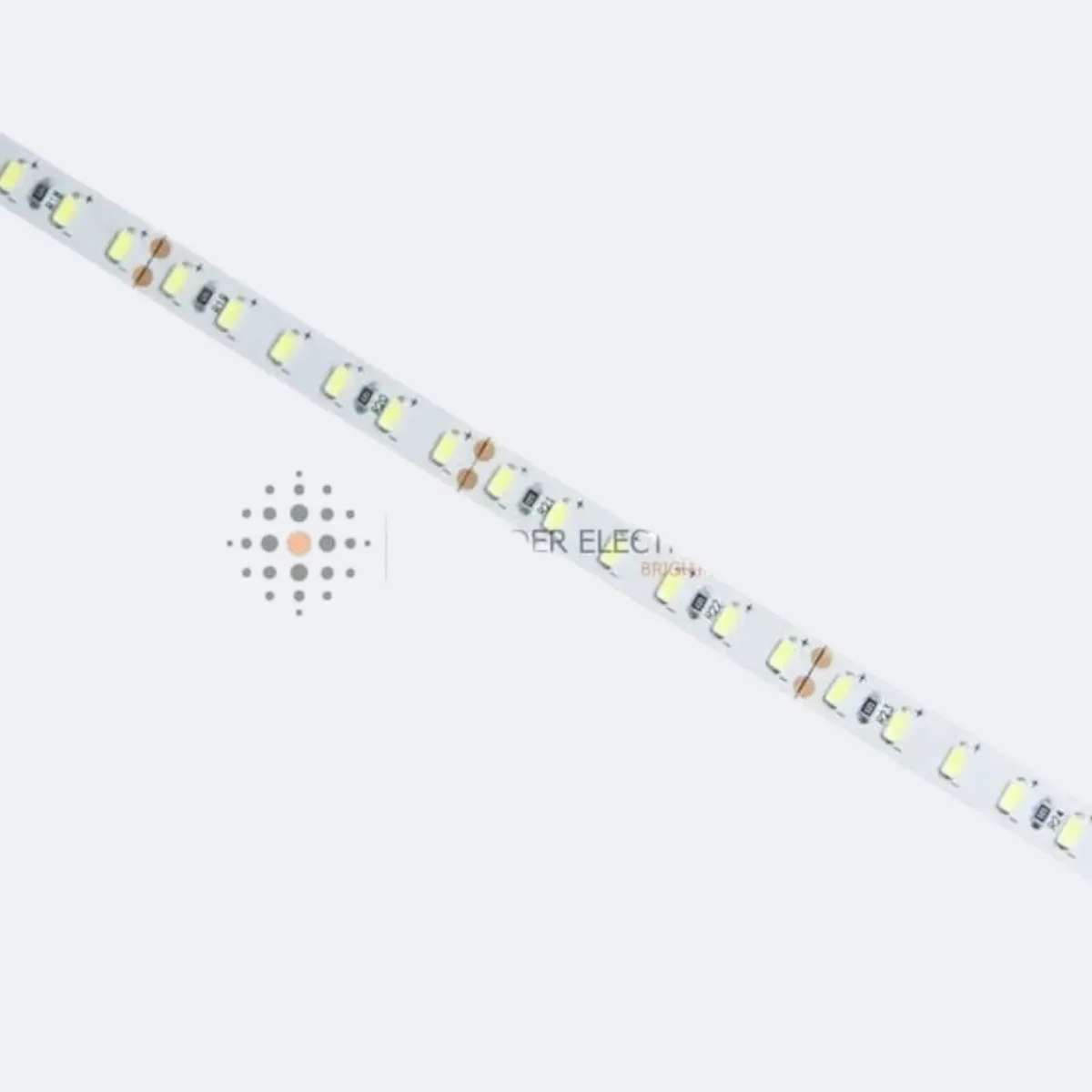
LED Strip 5mm wide IP20 120 LEDs/m 24V 12W/m
LED Strip 3014 120 LEDs Diagram
14.80 € SKU: WLED-180 In stock
Why 24V LED strips outperform 12V in professional installations
Choosing between 24V and 12V LED strips is not simply a matter of preference — it is an engineering decision with measurable consequences. At 24 volts, the current flowing through the strip is exactly half compared to a 12V strip at the same wattage. Lower current means less resistive loss across the copper traces, less heat generation and the ability to power runs of 10 to 12 metres from a single feed point without visible brightness drop-off.
For contractors and lighting designers, the practical impact is significant: fewer injection points, shorter cable runs and more compact power supplies. When the project involves continuous cornices, recessed ceiling profiles or full-perimeter room lighting, 24V strips dramatically simplify the electrical layout while delivering a more uniform result.
Key applications where 24V makes a real difference
In bathrooms and wet areas, 24V LED strips with IP65 or IP67 protection bring an added layer of electrical safety. Because they carry half the current of an equivalent 12V strip, the risk in the event of accidental water contact is inherently lower. Back-lit mirrors, shower perimeter lighting and ambient bathtub illumination are all areas where 24V has become the industry standard.
In commercial and residential décor, 24V strips handle distances that would be impractical at 12V. Bar counters exceeding 5 metres, hotel corridor perimeters, continuous 8-metre shopfront displays and large-format display cabinets all benefit from the even light output that lower-current strips provide over long distances.
Architectural-scale installations — building façades, exterior cornices, pedestrian bridges — demand long, centrally fed runs. With 24V strips, these projects require less wiring infrastructure and deliver a visually superior result compared to any 12V alternative.
Energy efficiency and extended lifespan
With half the current on the copper conductors, thermal stress is significantly reduced. This translates into a longer operational life and more stable luminous efficacy (lm/W) over time. In retail and hospitality environments running 12 to 14 hours a day, this difference accumulates — reflected in lower electricity bills and longer replacement cycles.
Moreover, 24V power supplies generally achieve higher conversion efficiencies than their 12V counterparts at equivalent total wattage, as they operate with lower output currents and produce fewer Joule-effect losses in connectors and splices.
Compatibility and control options
Our 24V LED strips are compatible with DALI, DMX, PWM and 0-10V dimmers, making them suitable for any professional control system. We stock colour temperatures from 2700K warm white through to 6500K daylight, plus RGB and RGBW versions for chromatic projects. Every reference ships with high-bond 3M adhesive and comes in 5-metre reels with cut lines every 5 or 10 cm depending on the model.
At GP Trader we source directly from certified factories and maintain permanent stock of the most demanded references for immediate dispatch across the Iberian Peninsula and mainland Europe.
Are 24V LED strips safe for bathroom use?
Yes, provided you select a strip rated IP65 or higher and install the power supply outside the splash zone. 24V qualifies as safety extra-low voltage (SELV) and offers an additional margin over 12V in damp environments.
Can I mix 24V strips with 12V accessories?
No. 24V strips require voltage-matched power supplies, controllers and dimmers. Connecting a 24V strip to a 12V supply will produce insufficient light, while connecting a 12V strip to 24V will cause permanent damage.
What is the maximum run length from a single feed point?
It depends on the model and wattage per metre, but as a general guideline 24V strips allow 8 to 12-metre runs without noticeable drop-off, compared with the 4–5 metres typical of 12V. For longer runs we recommend dual-end current injection.
Do 24V strips consume more power than 12V?
No. Power consumption depends on wattage per metre, not voltage. A 14.4 W/m strip draws the same total power at 24V as at 12V — the difference is that current is halved, reducing cable losses and improving overall installation efficiency.
What power supply do I need for my 24V strips?
Calculate the total strip wattage (W/m × length) and add a 20 % headroom margin. For example, 5 metres of 14.4 W/m strip requires at least an 86 W supply (72 W + 20 %). Browse our LED power supply range for the right match.
12V vs 24V comparison
| Parameter | 12V strips | 24V strips |
|---|---|---|
| Max run from one point | ~5 m | ~10 m |
| Voltage drop | High (visible >3m) | Minimal |
| Efficiency W/m | 4.8–14.4 | 9.6–19.2 |
| Current per meter | Higher (≈1A/m) | Lower (≈0.5A/m) |
| Cable gauge | Larger | Smaller |
| Ideal applications | Short runs, cars, furniture | Long runs, architecture, hotels, bathrooms |
Technical sheet
- CRI
- >90 (R9 > 50)
- SDCM
- <3 (color consistency)
- TM-30 Rf/Rg
- Rf ≥ 85, Rg 96–105
- Color temperature
- 2700K / 3000K / 4000K / 6000K + RGB / RGBW / CCT
- Density
- 60 / 120 / 180 / 240 / 480 LEDs/m
- Power
- 9.6 – 19.2 W/m
- Voltage
- 24V DC
- IP rating
- IP20 / IP65 / IP67
- Lifespan L70
- > 50,000 h
- Dimming
- DALI / 0-10V / TRIAC / PWM
- Warranty
- 3 years